Re-reading notes and highlighting feel productive but barely move your grades. Two methods do almost all the real work: flashcards to lock in core knowledge, and past papers to master exam technique.
1. Flashcards: retrieving core knowledge
The most powerful thing you can do is try to recall an answer before checking it. This is called retrieval practice, and the effort of remembering is exactly what makes the memory stick.
Make them well
One question, one answer per card. Keep them short. Writing the cards yourself is itself a useful first pass over the material — but the real learning is in testing yourself with them later.
Always answer first
Read the question, say or write your answer out loud or on paper, and only then flip the card. No peeking. The struggle to recall is what builds the memory — don't rob yourself of it.
Space it out
Don't cram one subject for hours. Review a little, often, with gaps in between. Revisiting a card a day or two later — just as you're starting to forget — is what makes it stick for good.
What this looks like in practice
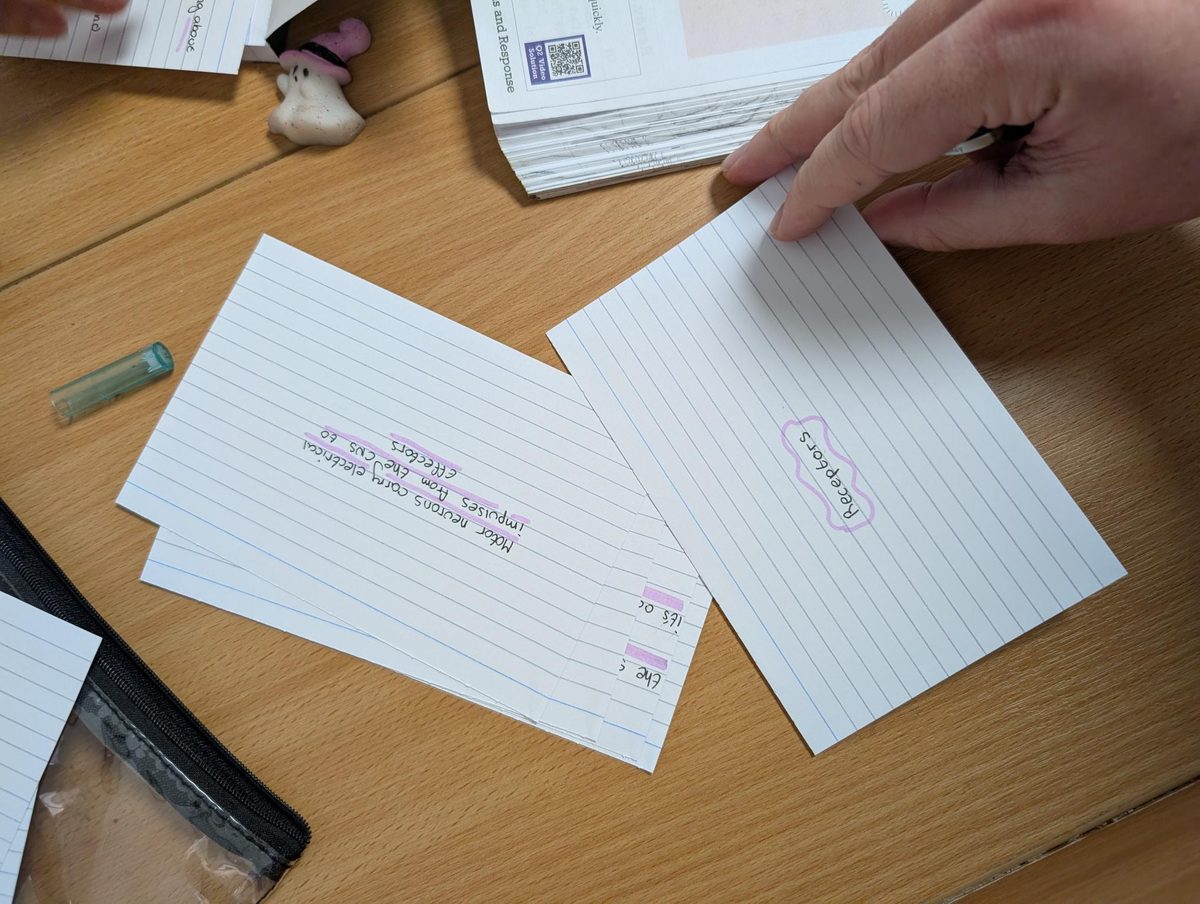
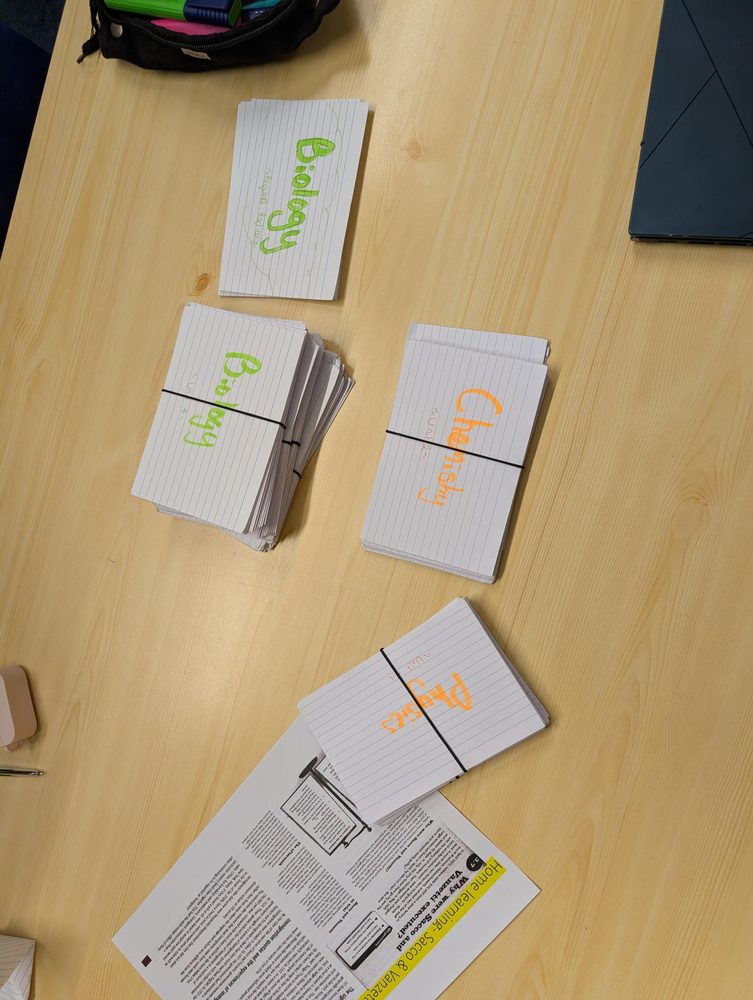
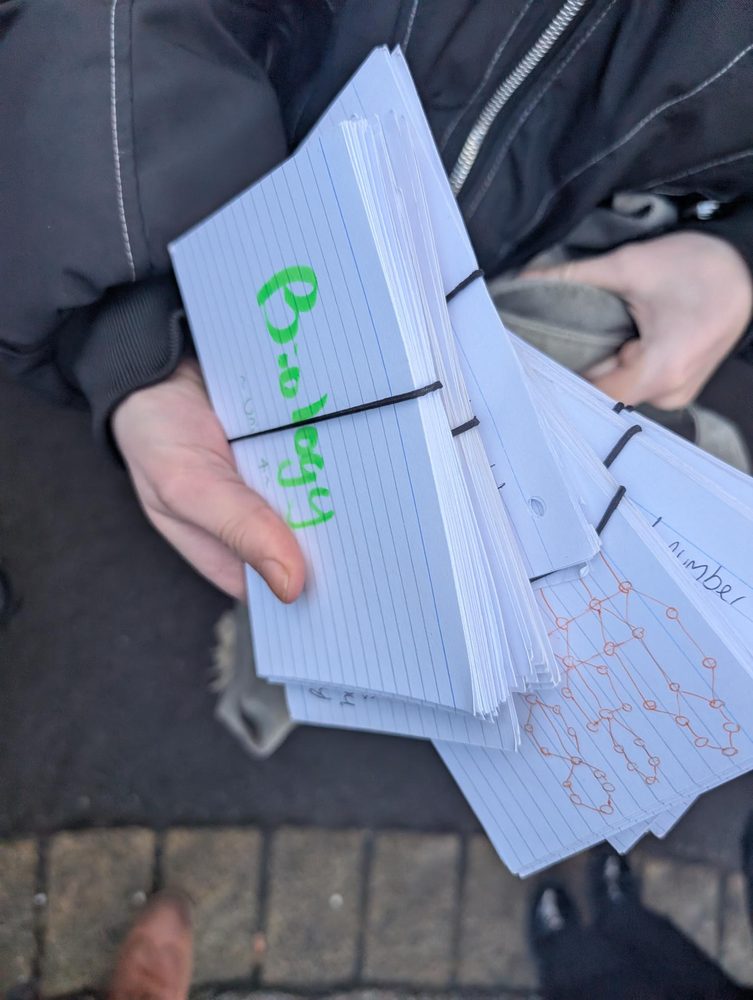
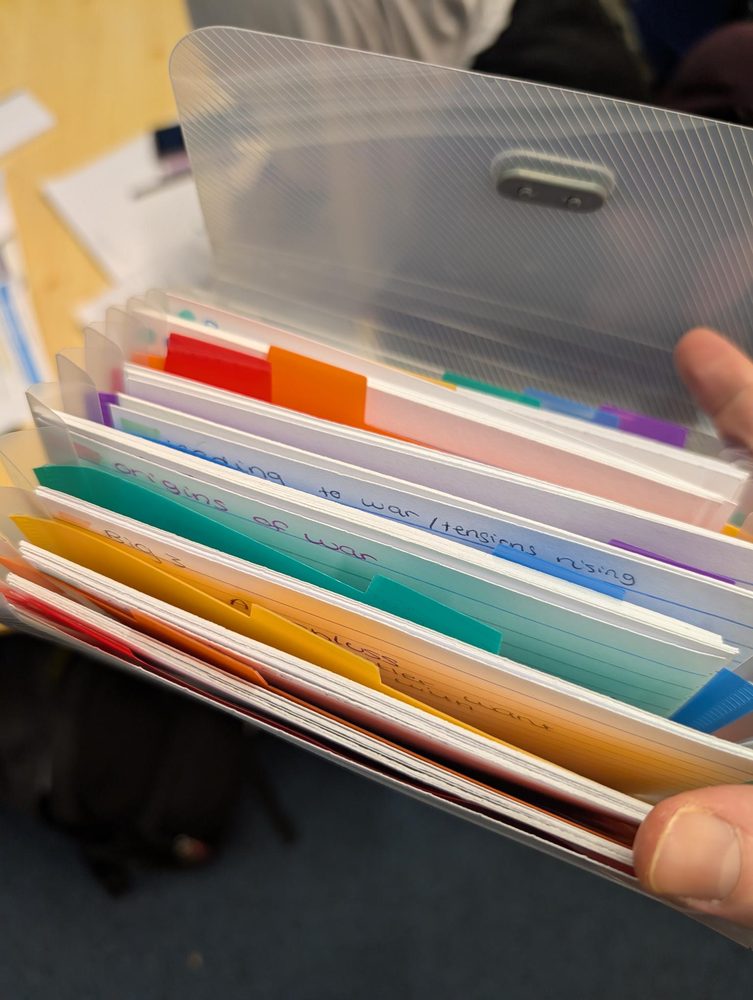
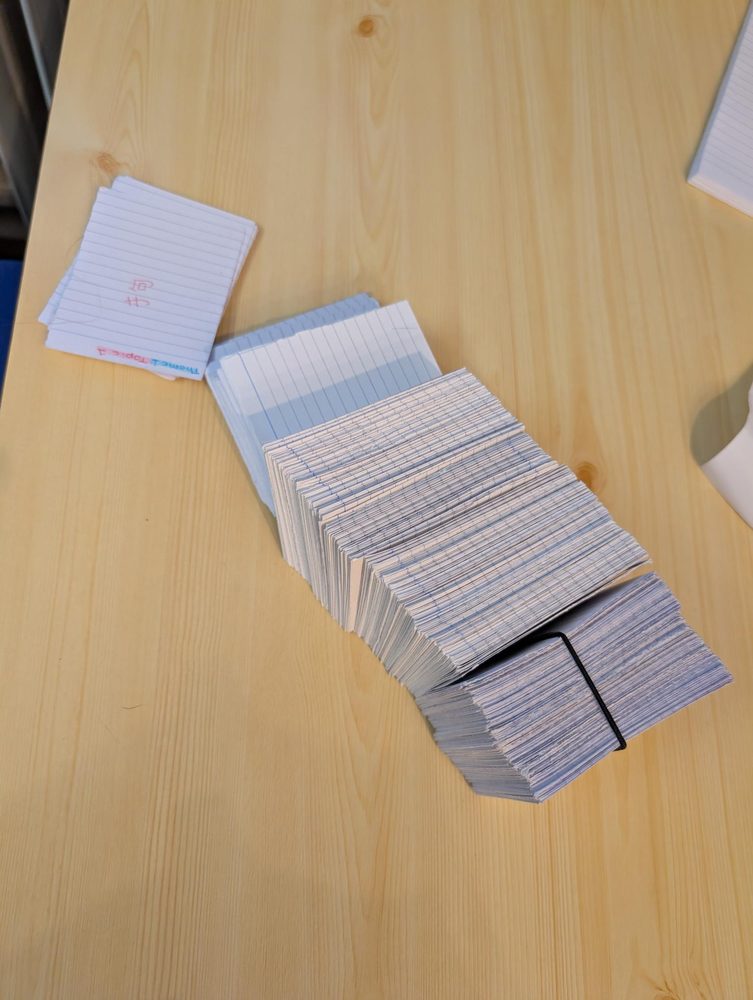
Macmillan students using flashcards to revise — handwritten, organised by subject and topic, and carried everywhere for quick retrieval practice.
Try the Leitner box system
A simple, proven way to space your cards using three piles or boxes:
- Box 1 — every day. All new cards and any you got wrong start here.
- Box 2 — every few days. When you get a Box 1 card right, promote it here.
- Box 3 — once a week. Cards you reliably know. Get one wrong anywhere? It drops straight back to Box 1.
This way you spend most of your time on the things you don't yet know, and just enough on the things you do. Free apps like Anki and Quizlet automate the same idea if you prefer working on a screen.
2. Past papers: mastering exam technique
Knowing the content isn't the same as being able to show it under timed conditions. Past papers train the second skill — and they tell you exactly how the examiner wants the marks earned.
What past papers teach you
How questions are worded, how many marks signal how much to write, how to manage your time, and which topics keep coming up. After a few papers, nothing in the real exam feels unfamiliar.
Use the mark scheme
The mark scheme is the answer key and a checklist of what earns marks. Mark your own work honestly against it — spotting why you lost a mark is where the biggest improvements come from.
How to work through a past paper
- Build the knowledge first. Use flashcards to learn the content before you test it under exam pressure.
- Do it under timed conditions. Phone away, real time limit. Make it feel like the real thing.
- Mark it with the mark scheme. Be strict. Note every mark you missed and why.
- Turn gaps into flashcards. Anything you didn't know becomes a new card for Box 1. The two techniques feed each other.
- Redo your weakest questions. A week later, try the questions you struggled with again — without looking back.
Your teachers and the exam-board websites (AQA, Edexcel, OCR, WJEC and others) publish past papers and mark schemes for free. Ask your subject teacher which ones to use.
Pick one up at lunch
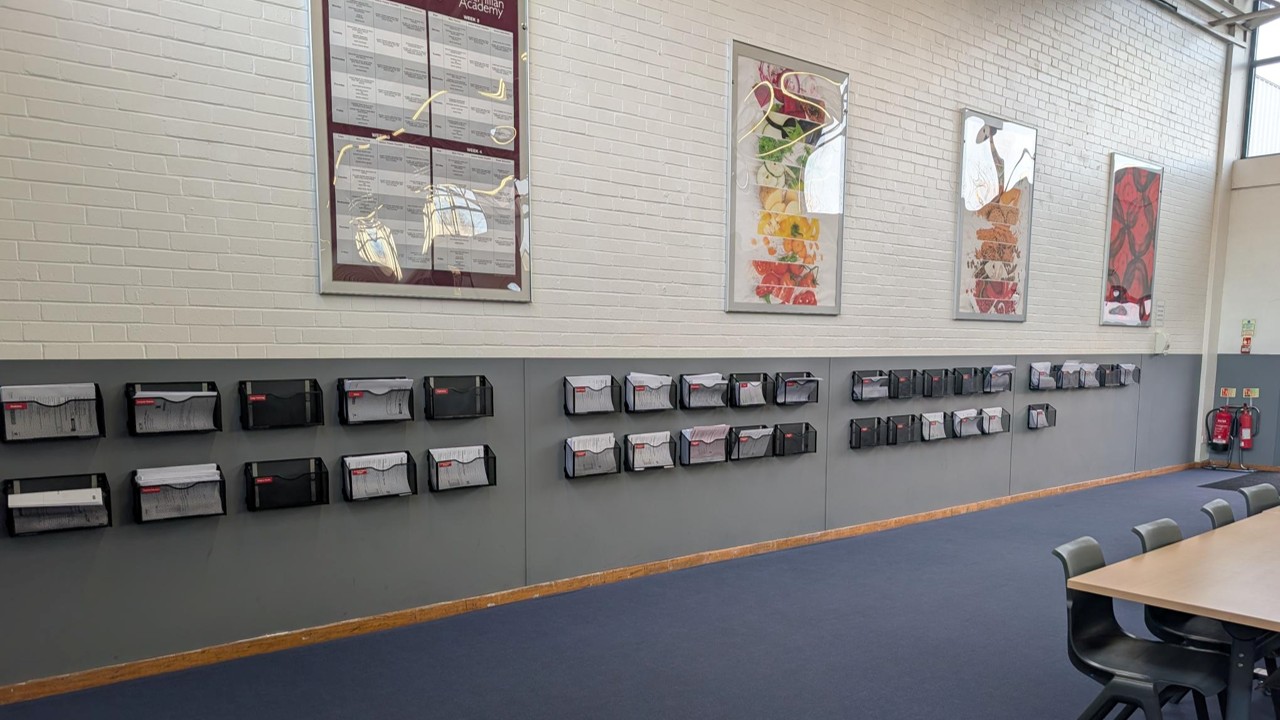
You don't even have to go looking. At Macmillan Academy you'll find past papers for every subject in the racks in the dining hall — grab one for a subject you're revising while you queue for lunch, and take it away to complete.
Putting it together
Flashcards and past papers aren't separate activities — they're a loop. Learn the knowledge with flashcards, prove it under exam conditions with past papers, and turn whatever you got wrong back into new flashcards. Round and round until the gaps close.